
12 Foods With Natural Digestive Enzymes
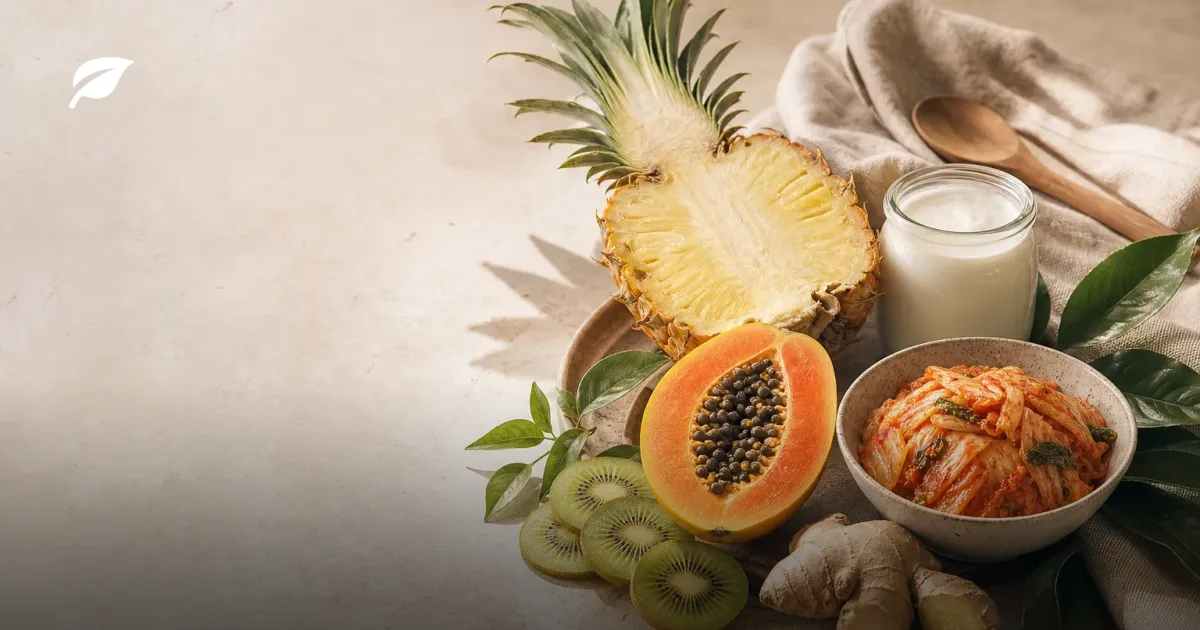
Digestive enzymes help break down proteins, fats, and carbohydrates. Here are foods that may naturally contain enzymes, along with how foods differ from enzyme supplements.
Digestion begins in the mouth and continues as food moves through the gastrointestinal tract. The body produces its own digestive enzymes, while some foods contain enzymes or develop enzyme-related compounds during fermentation.
A balanced perspective is more useful than promises that one food can “speed up digestion.” Food choices may support overall well-being, but they do not replace diagnosis or treatment. If discomfort after eating keeps happening, discuss it with a healthcare professional.
Contents
- How digestive enzymes work
- 12 foods to include in your diet
- Raw and cooked: why heat matters
- Foods or supplements
- A practical approach to eating
How digestive enzymes work
Enzymes are protein molecules involved in breaking food components down into smaller compounds. They can broadly be divided into three main groups:
- Amylase helps break down starches and other carbohydrates.
- Protease helps break down proteins.
- Lipase is involved in digesting fats.
Amylase begins working in the mouth. Later stages of digestion involve the stomach, pancreas, and small intestine. Digestive function can change with age and certain health conditions, but pronounced or persistent symptoms should not be attributed to a supposed “enzyme deficiency” without medical evaluation.
12 foods to include in your diet
The foods below are often associated with natural enzymes or fermentation processes. Their place in the diet depends not only on enzymes, but also on overall nutritional value, individual tolerance, and preparation method.
Fruits and other plant foods
- Pineapple. Contains bromelain, a group of proteases. Fresh pineapple is also used in marinades to help tenderize meat.
- Papaya. Contains papain, a protease associated with protein breakdown. Fresh papaya that has not been heated is important when trying to preserve enzyme activity.
- Mango. Its flesh contains amylase. As the fruit ripens, starches are converted into simpler sugars, making the mango sweeter.
- Banana. Contains amylase and glucosidases, which participate in the conversion of complex carbohydrates.
- Avocado. Provides lipase and contains unsaturated fats.
- Kiwi. Contains actinidin, a protease also used to tenderize meat.
- Ginger. Contains zingibain, a compound classified as a protease.
Fermented foods
- Kefir. Fermentation produces microorganisms and enzyme-related compounds. Kefir also contains protein and other nutrients.
- Sauerkraut. Lactic acid fermentation changes the food’s composition and supports the formation of various compounds.
- Kimchi. Like other fermented vegetables, kimchi is prepared with the help of microorganisms.
- Miso. A fermented soybean paste made with the participation of microbial cultures.
- Raw honey. May contain amylase, protease, diastase, and invertase. Pasteurization can reduce or eliminate some enzyme activity.
If you plan to place an order on iHerb, check the active promo code before paying.
Raw and cooked: why heat matters
Enzymes have a specific three-dimensional structure. Strong heating can change that structure, a process called denaturation, after which an enzyme loses some of its activity. For this reason, the enzymes in fresh pineapple, papaya, and other foods should not be assumed to remain fully active after boiling or baking.
This does not mean raw food is always better than cooked food. Heat can improve flavor, tenderness, and food safety. A practical approach is to combine fresh and cooked foods while considering individual tolerance and food-safety practices.
Foods or supplements
Supplements containing amylase, lipase, and proteases may be convenient in some situations, but whether they are appropriate depends on the cause of symptoms and a person’s health. The presence of enzymes on a label does not, by itself, show that a particular product is right for you.
Do not use enzyme products on your own as a substitute for evaluation if you have persistent pain, diarrhea, vomiting, unexplained weight loss, blood in the stool, or other warning signs. If you have a chronic condition, are pregnant, or take medications, consult a healthcare professional before using supplements.
A practical approach to eating
- Add fresh fruit and fermented foods gradually, paying attention to how you tolerate them.
- Chew food thoroughly, and do not conclude that you are “intolerant to enzymes” based on a single episode.
- Consider the whole food: honey is still a source of free sugars, while kimchi and miso may be high in sodium.
- Store fermented and perishable foods according to the package directions.
- If discomfort keeps returning, work with a healthcare professional to identify the cause rather than focusing only on changing your food list.
Foods with natural enzymes can add variety to your diet, but digestive health depends on the full picture: regular meals, overall dietary pattern, tolerance, sleep, and medical factors. Choose familiar foods and view enzymes as one part of nutrition—not a universal solution.
Explore digestive health resources
This article is based on an informational iHerb publication; it does not replace medical advice. Read the iHerb source