
Protein Powders: How to Choose the Right Option
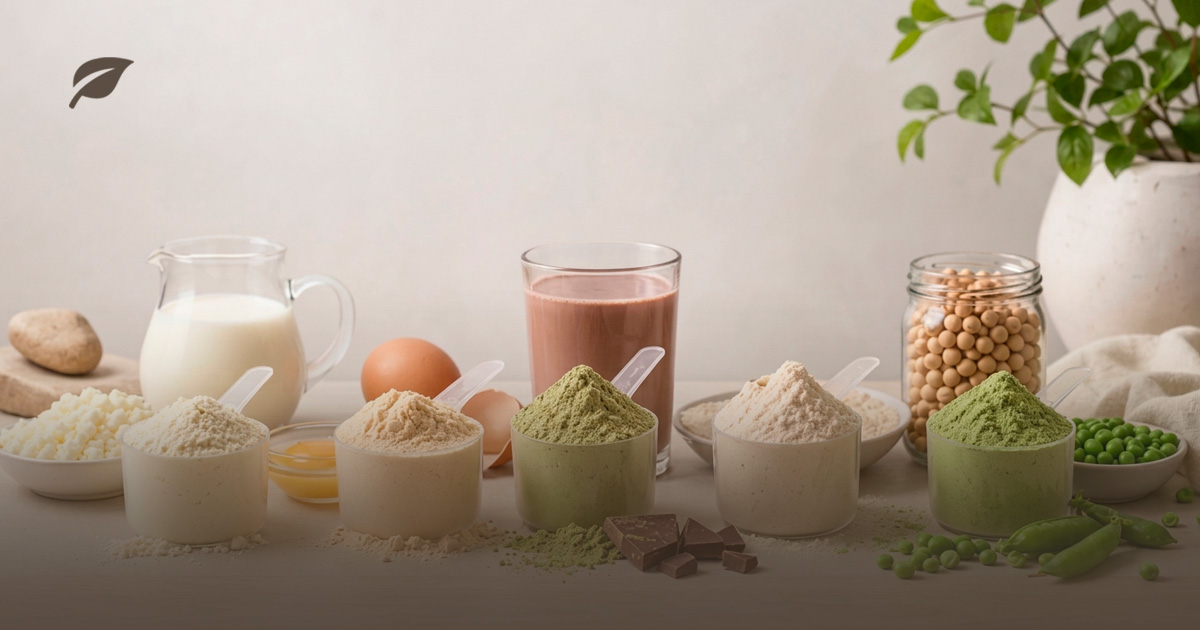
Protein powder is primarily a convenient way to add protein. Here’s how the main options differ and what to consider before buying.
Protein helps the body maintain muscles, skin, hair, connective tissues, enzymes, and immune proteins. However, a powdered supplement is not necessary or suitable for everyone: if your diet already provides enough protein, the main benefit is convenience.
Your choice depends on amino acid composition, tolerance, dietary preferences, and your goal. The guide below is a practical overview without universal promises: no single product is best for everyone.
Table of contents
- Protein and individual needs
- Main types of protein powder
- Plant-based options
- How to choose a product
- Who should use caution
- How to use protein in your diet
Protein and individual needs
Proteins are made of amino acids. Nine are considered essential: the body cannot produce enough of them, so they must come from food. A complete protein contains all nine in suitable proportions. Most dairy and egg proteins are complete; soy isolate is also considered complete.
For a healthy adult, a commonly cited basic reference is about 0.8 g of protein per kilogram of body weight per day. Needs may be higher with intense training, older age, growth, and certain physiological periods. A precise target should take your overall diet, activity level, and health into account.
A typical serving of protein powder provides approximately 20–30 g of protein, but check the “protein” line in the nutrition facts rather than relying only on the weight of the scoop. More is not automatically more effective: excess protein can displace foods that provide fiber, vitamins, and minerals.
Main types of protein powder
Whey protein
Whey is the protein portion of milk separated during cheesemaking. Concentrate generally contains more lactose and fat, while isolate undergoes more extensive filtration and usually contains less of both. Whey protein is digested quickly and is rich in leucine, so it is often chosen after training or as a simple addition to meals.
People with an allergy to milk proteins should avoid whey products. Those with lactose intolerance may tolerate isolate better, but individual responses vary.
Casein and milk protein
Casein is also a complete milk protein, but it is digested more slowly than whey. This can be useful when you want a longer-lasting protein source, such as between meals. Milk protein may combine casein and whey fractions, so check the specific product’s ingredients separately.
Egg protein
Egg-white powder is a complete option without milk protein or lactose. It may suit people who avoid dairy but still eat eggs. It should not be used by people with an egg allergy.
Collagen and bone broth protein
Collagen peptides come from animal sources and are partially broken down for easier use. Bone broth protein is made from concentrated broth. These products may have a place in a diet for a specific purpose, but they should not be treated as complete replacements for regular protein: collagen and bone broth protein contain little or practically no tryptophan.
For this reason, collagen products are more appropriately viewed as a separate amino acid source rather than the only protein in your diet.
If you plan to place an order on iHerb, check the active promo code before paying.
Plant-based options
Plant proteins differ in amino acid composition and digestibility. This does not automatically make them inferior, but it may mean combining different sources or adjusting the serving size.
- Pea protein contains all essential amino acids but is relatively lower in methionine and usually contains less leucine than whey.
- Soy isolate is one of the more complete plant-based options and often has a high protein content.
- Rice protein is generally lower in lysine, so it is often combined with pea protein.
- Seed proteins from pumpkin, hemp, chia, flax, or sunflower seeds may add flavor, fiber, and other components, but their amino acid profiles depend on the source.
- Spirulina contains protein and micronutrients, but a small standard serving is not always suitable as the main way to increase protein intake.
Variety is useful in a plant-based diet: legumes, grains, nuts, and seeds complement one another. A prepared powder may already combine several sources, so read the full ingredient list and check the amount of protein per serving.
How to choose a product
Start with your purpose rather than the flavor or marketing promise: do you need protein for a convenient snack, recovery after activity, or simply a dairy-free option?
- Compare the amount of protein per serving with the serving size.
- Check the protein source and potential allergens, including milk, eggs, soy, and other ingredients.
- Look at the sugar, sweeteners, flavorings, and any additional active ingredients.
- If you choose a plant-based product, determine whether it uses one source or a blend.
- Favor a clear ingredient list and brands that provide information about independent quality testing.
Independent testing is particularly important for powders: raw-material quality and possible contaminants depend on ingredient sourcing and manufacturing. Plant-based origin does not guarantee purity, just as animal-based origin does not automatically mean superior quality.
Who should use caution
For healthy adults, protein powders generally do not cause problems when used reasonably, but supplements should not be started automatically when chronic disease is present.
- With chronic kidney disease, diabetes involving kidney damage, or liver disease, a medical professional should determine your protein target.
- During pregnancy and breastfeeding, choose products with short ingredient lists and avoid unnecessary stimulants, herbs, and high doses of additional substances.
- People with a milk-protein allergy should avoid whey, casein, and other dairy-based products.
- With lactose intolerance, different dairy-based formulas may cause different reactions.
This article is for general information and does not replace advice from a doctor or dietitian. If you follow a therapeutic diet, consider your total protein intake from all foods, not just the powder.
How to use protein in your diet
Protein powder can be mixed with water or milk, or added to yogurt, oatmeal, or a smoothie. For a more balanced drink, combine it with a liquid, fruit or berries, and, if needed, a source of fiber such as oats, seeds, or vegetables.
A simple option is plant-based or regular milk, one serving of protein, and frozen berries. For a more filling drink, add oats or plain yogurt. If the powder causes bloating, an unpleasant taste, or other symptoms, stop using it and review the ingredients; the cause may sometimes be lactose, sugar alcohols, or flavorings rather than the protein itself.
The main consideration is not the maximum dose but whether the product fits your goal, tolerance, and overall diet. Protein powder is convenient when it helps you regularly meet your protein needs, but a varied diet remains the foundation.
Browse protein product categories
Material prepared from iHerb reference information; this is not medical advice. iHerb